

The boiler runs better when the room knows what it’s looking at.
Most commercial boiler failures aren’t catastrophic. They’re slow problems that go unnoticed until they aren’t slow anymore. A trained operator catches them early. We’ve seen it pay off in every market we serve, which is why we run these sessions at no cost to our partners and customers.
Our trainers are the same factory-trained technicians who service the equipment. They teach what they actually see in the field, not just what’s in the manual.

Topics, picked by you.
Pick the curriculum that matches your team’s gap. We tailor the session to the time you have.
Boiler fundamentals
How a commercial boiler works, from combustion through the heat exchanger to the load. Foundational training for new operators and crossover techs.
Day-to-day operation
Startup, shutdown, daily checks, and water treatment basics. The routines that catch problems before they become outages.
Maintenance & troubleshooting
What to inspect, what to clean, and what to flag for the service tech. Decision frameworks for the most common alarms and faults.
Safety & compliance
TDLR requirements, lockout-tagout, combustion safety, and what an inspector actually wants to see during a walkdown.
Manufacturer deep-dives
Product-specific training on the equipment in your room: controls platforms, common failure modes, parts and service intervals.
Custom topics
Tell us what your team is wrestling with this quarter. We’ll build the curriculum.
At our place or yours.
Both options carry the same content and the same instructors. Pick what works for your team and your schedule.
Boiler operator training, in front of a live boiler.
Most boiler training is a slide deck in a conference room. Ours is a room at our Missouri City headquarters with commercial boilers in it under live fire, and the factory-trained technicians who service that equipment every day working alongside you.
You learn by doing, on the same kind of systems you operate, with the people who fix them for a living. Both courses are on us.
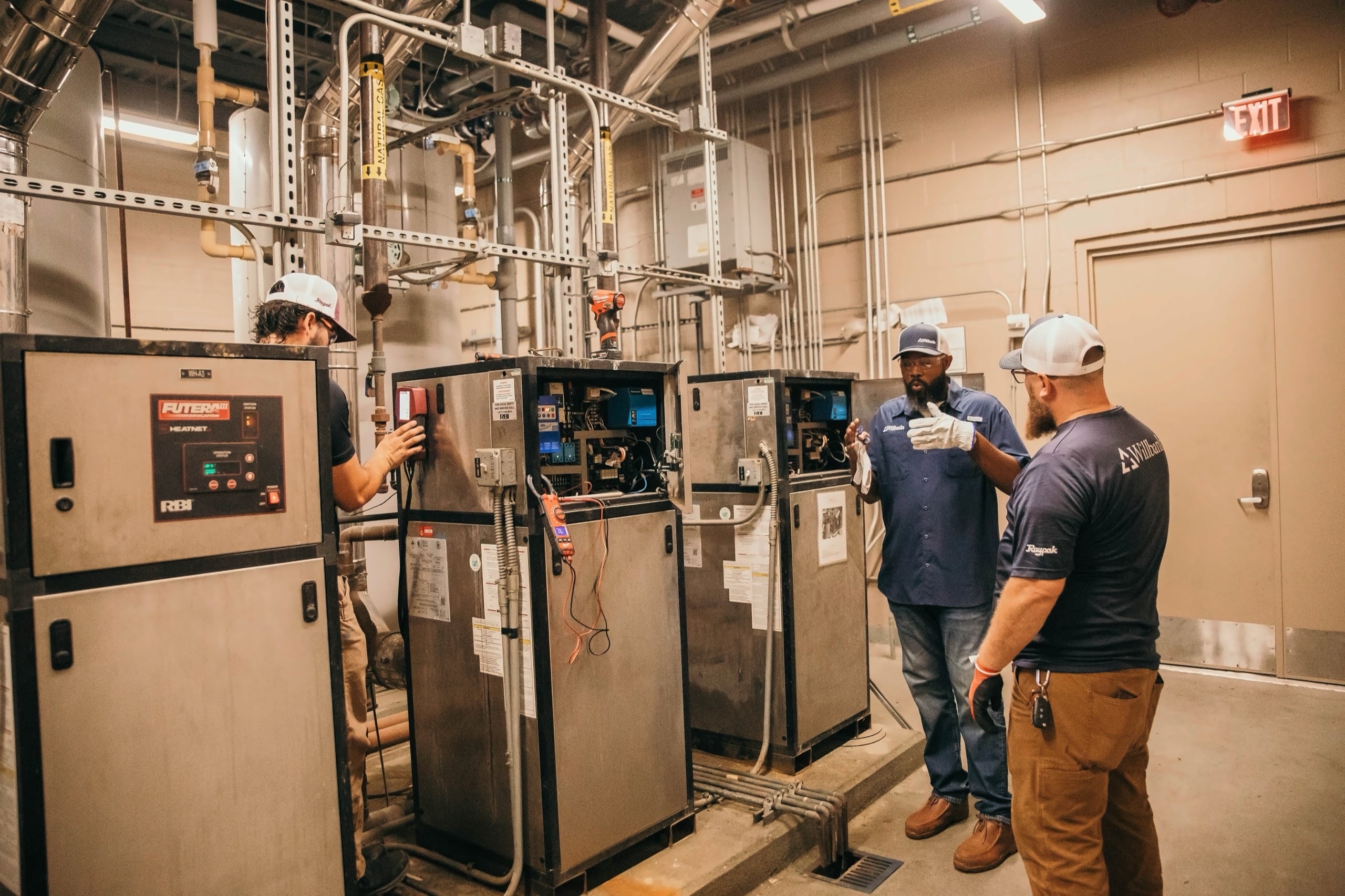
Hands-on
You work the equipment yourself, with a factory-trained technician alongside you rather than at the front of a room.
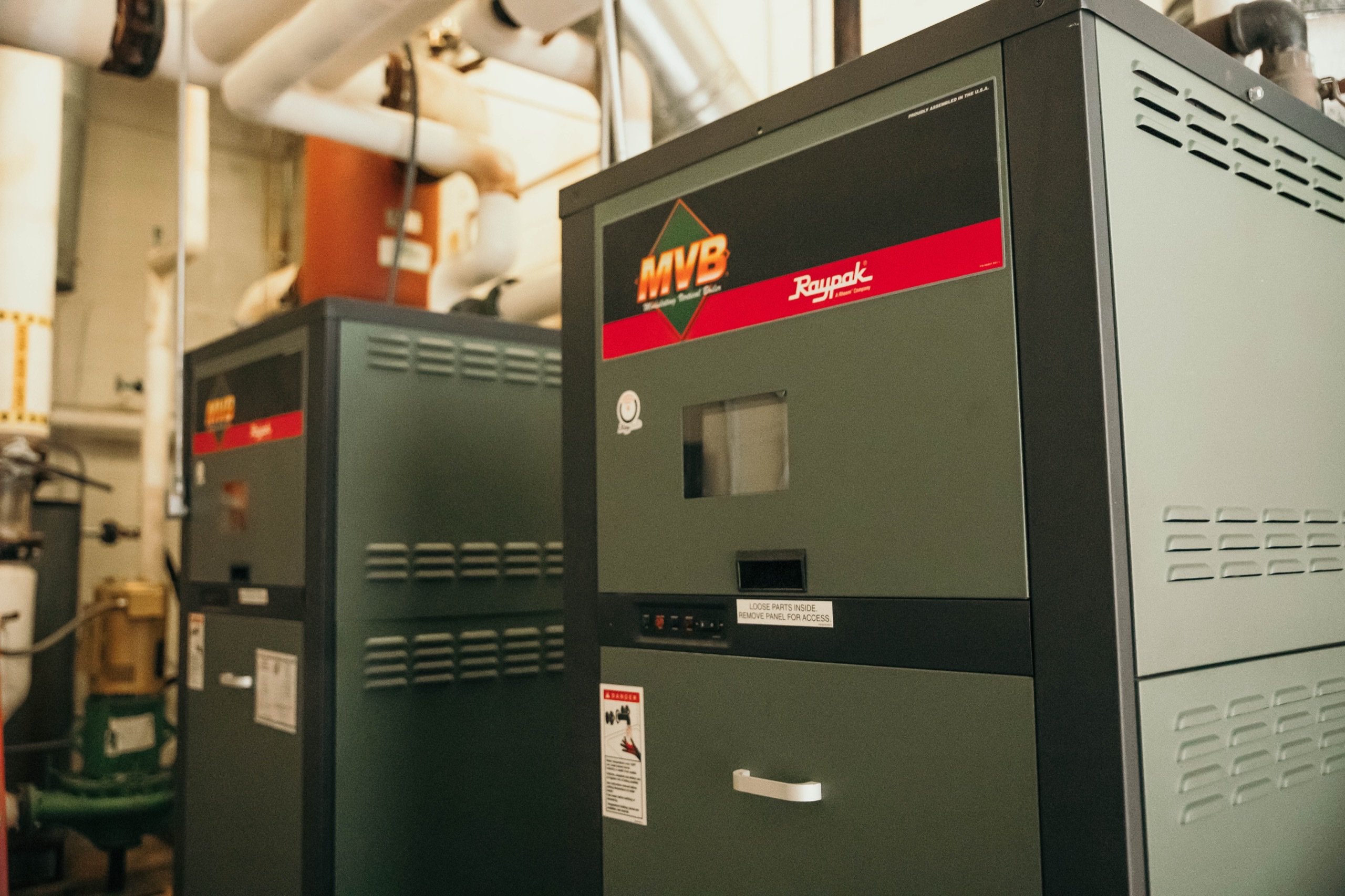
Real equipment
Commercial boilers under live fire, piped and controlled the way they are in the buildings you run.
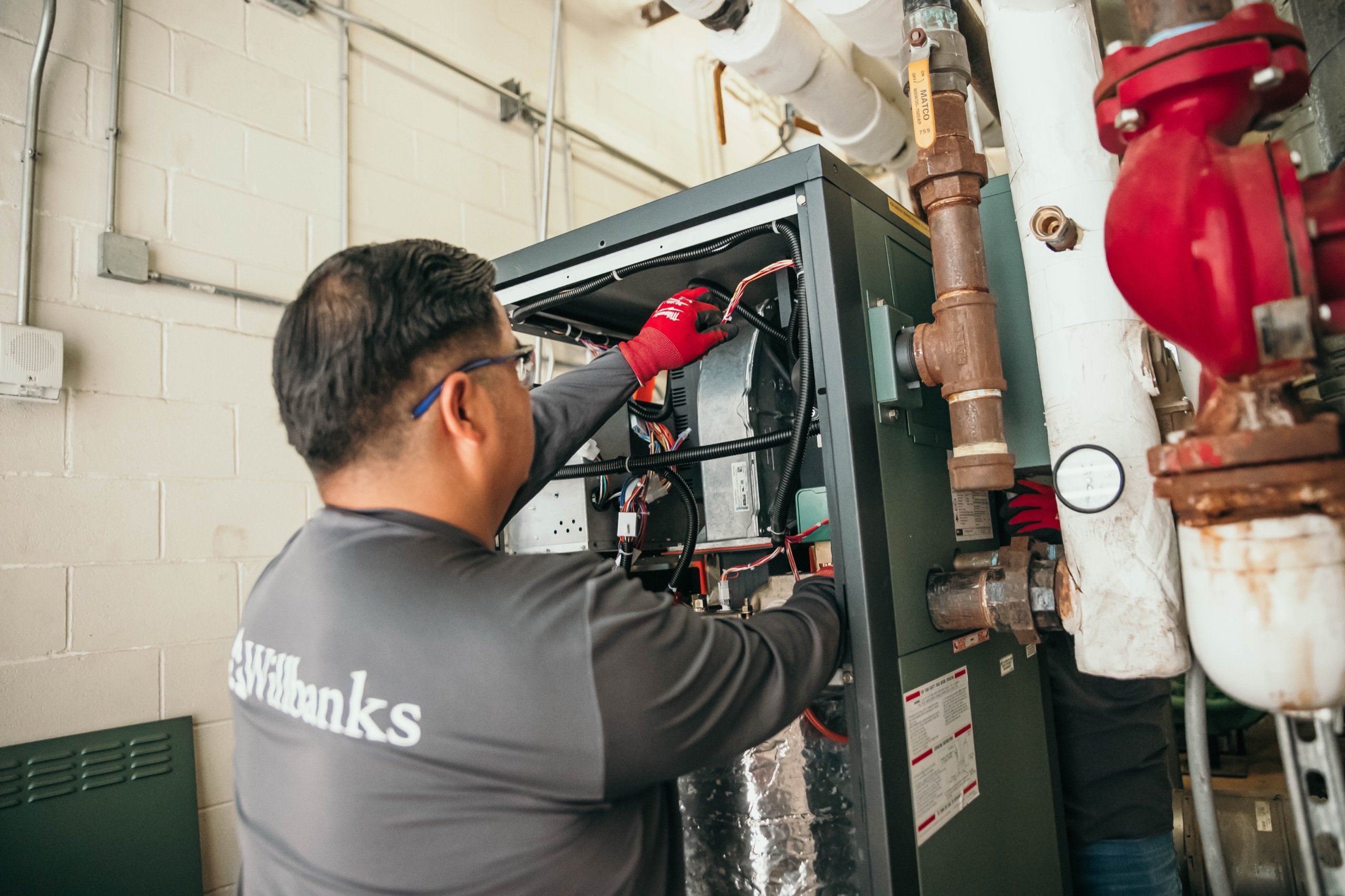
Real-world skills
Build confidence on the equipment here, then take it back to your own boiler room on Monday.
Two courses. Start where your team is.
Both run two days, 8 AM to 12 PM, or a single eight hour day where that suits your crew better. Breakfast and lunch are provided.
Boiler Basics 101
Built for facility managers, maintenance personnel, technicians and engineers. If your team has people keeping a boiler running without ever having been taught how it works, this is the one they should sit in.
- Components what is inside the cabinet, and what each part is there to do.
- Operation startup, shutdown, and the daily checks that catch problems while they are still small.
- Water treatment the basics of why water chemistry decides how long a boiler lasts.
- Safety what safe operation looks like, and what to do when a reading is wrong.
Boiler Basics 102
Built for experienced operators, lead technicians and supervisors. It assumes the fundamentals, so start at 101 if any of those are shaky.
- Advanced controls reading what the control platform is actually telling you.
- Troubleshooting working a fault back to its cause instead of swapping parts until it stops.
- System efficiency running the system well rather than just keeping it lit.
Classes run at 735 Buffalo Run, Missouri City, TX 77489, and seats are limited. The schedule rolls through the year, so email training@willbanksinc.com and we will tell you when the next session runs.
Ask about the next sessionBoiler operator training, answered.
- Operators, maintenance teams, contractors and engineers who work with commercial boilers. Sessions are run by a factory-trained Willbanks instructor and cover what actually comes up on commercial equipment rather than what is in the manual.
- Boiler 101 and Boiler 102 normally run four hours a day across two days, or as a single eight hour day where that suits your crew better. If your team needs something different, tell us the topics and the time you have available and we will build the curriculum around it.
- The training is practical rather than a licensing course. It covers TDLR requirements, lockout-tagout, combustion safety, and what an inspector looks for during a walkdown, which is what an operator needs to run the room safely and pass an inspection. It does not itself issue a license or a certification.
- It can be held either at our Missouri City headquarters, which has a dedicated training room next to live equipment, or on site at your facility. Both settings carry the same content and the same instructors. The Houston facility is the better option for hands-on operator training and manufacturer deep-dives, because you can walk around real units.