
Replace the boiler without treating the water and you buy the same problem twice.
A commercial boiler installation or replacement in San Antonio starts with the water, not the equipment. If scale is what killed the old boiler and the new one goes onto the same untreated supply, the clock starts again the day it fires. That decision gets made before anything is ordered, and it is the most expensive one on the job.
A San Antonio replacement starts with the application rather than the equipment. What is the water doing? Was the original installed correctly? What failed, and why? Then, and only then, what to put in and whether a softener belongs in front of it.
The second question is whether the boiler you had is still the right boiler. Buildings run lower water temperatures than they used to and use boilers through the summer for reheat. If return water comes back at 110 degrees and the unit was never a condensing boiler, it is now running in a condensing application and will gum up and fail early. Nothing about that failure looks like anybody's fault.
Replacing a commercial boiler in Texas is also not only a purchase. A boiler installation form has to be filed with the state, the state sends an inspector, and an operator's permit is issued to the owner. TDLR requires a carbon monoxide monitor on any boiler over 199,999 BTU input. We supply one with every new boiler that goes out.
Equipment and labor from one team.
Taking out something old and putting something new in, with the design, the equipment, the install, and the paperwork under one roof.
Survey and sizing.
Sized to how the building is operated now, including return water temperatures, summer reheat duty, and any tempering valves added since the original went in.
Water treatment in the same scope.
At San Antonio hardness, the softener is part of the installation conversation, not a separate project to get to later.
Removal, install, and startup.
The old unit out, the new one in, vented, piped, commissioned, and tuned, by the same company that sold it to you.
State filing and the CO monitor.
The installation form filed with Texas, the state inspection coordinated, and a carbon monoxide monitor supplied with every new boiler.
How a replacement runs.
Long lead items are the part worth starting early. A common size in a standard configuration can move fast. A custom unit with a specific burner and a long controls list cannot.
- 01We look at the application, not the boiler.Was it installed correctly the first time? What is the water doing? What changed about how the building is run?
- 02Sizing and equipment selection.Including whether the replacement should be the same type of boiler at all, given how the building operates today.
- 03Downtime planned before the order goes in.Phase the work across existing units where there is spare capacity, or stage a rental where there is not. This is decided up front, not on the day.
- 04Install, commission, and file.Startup, combustion tuning, the state installation form, the inspection, and the operator's permit that then stays the owner's responsibility.
Boiler installation in San Antonio.
- There are too many variables for an average to be worth quoting. The equipment is often the smaller half of the number, and removing the old unit, the install, venting, gas supply, water treatment and the downtime plan all move the total. That is why we take the time on site. A job walk lets our estimators give you an accurate assessment and a price for the best path to the outcome you are after, rather than a figure that falls apart once someone looks at the building.
- In the majority of cases we would recommend one. San Antonio water runs around 21 grains per gallon, and a new boiler on the same untreated supply tends to go the way the last one did. We run a hardness test on site at no charge as part of the job walk, so the recommendation comes from your building's own reading rather than from the city average.
- A boiler installation form has to be filed with the state. The state then sends an inspector and issues an operator's permit to the owner, which stays the owner's responsibility to keep valid. TDLR also requires a carbon monoxide monitor on any boiler over 199,999 BTU input, which shuts the boiler down above 200 parts per million.
- Yes, and it should. Where the system has more than one boiler and spare capacity we phase the work, taking one unit out at a time. Where it does not, a rental carries the building while the new unit is ordered and installed.
- A common size in a standard configuration moves quickly. Large units, custom configurations, a specific burner, or a long list of controls carry the long lead times, and those are the ones worth ordering before the boiler quits on you.
The rest of what the branch does.
Everything below runs out of 6035 Randolph Blvd, with the same techs and the same inventory.
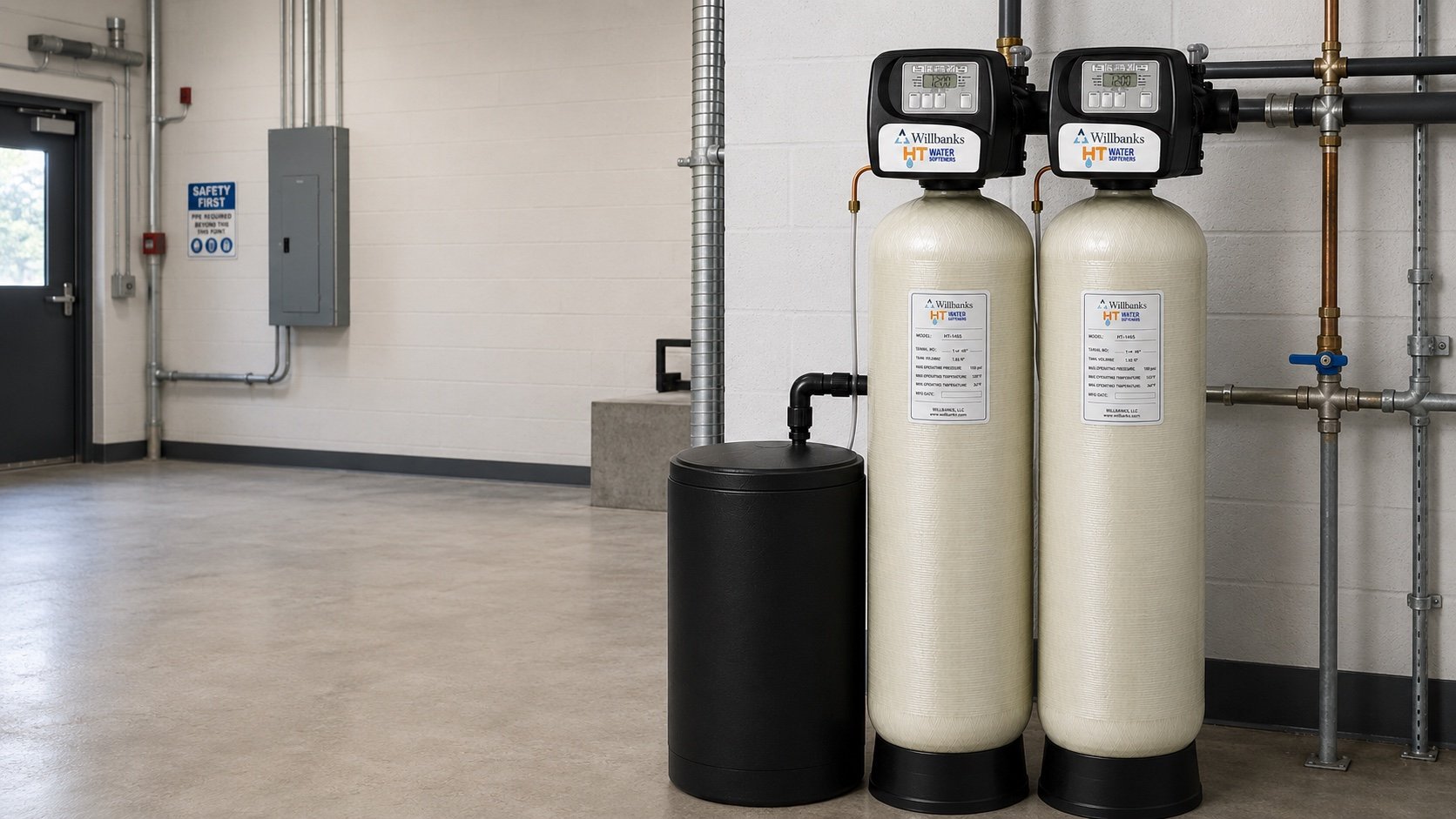
Commercial water softener
San Antonio runs about 21 grains per gallon, the hardest water of any city Willbanks works in. What that does to a boiler, and the softeners that stop it.
Learn more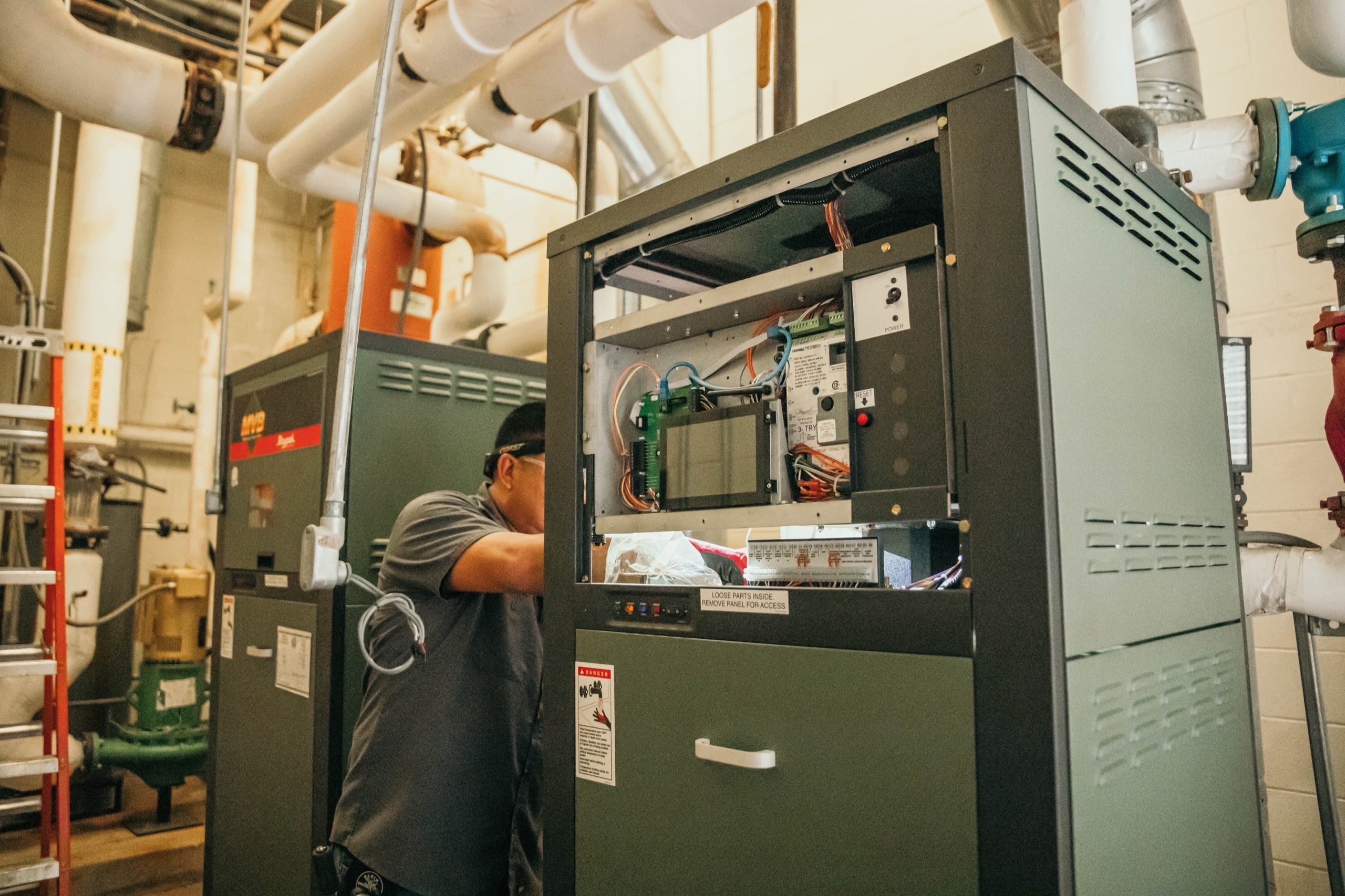
Boiler repair
24/7/365 commercial and industrial boiler repair in San Antonio, steam and hot water, from our Randolph Boulevard branch. Any brand, not just ours.
Learn more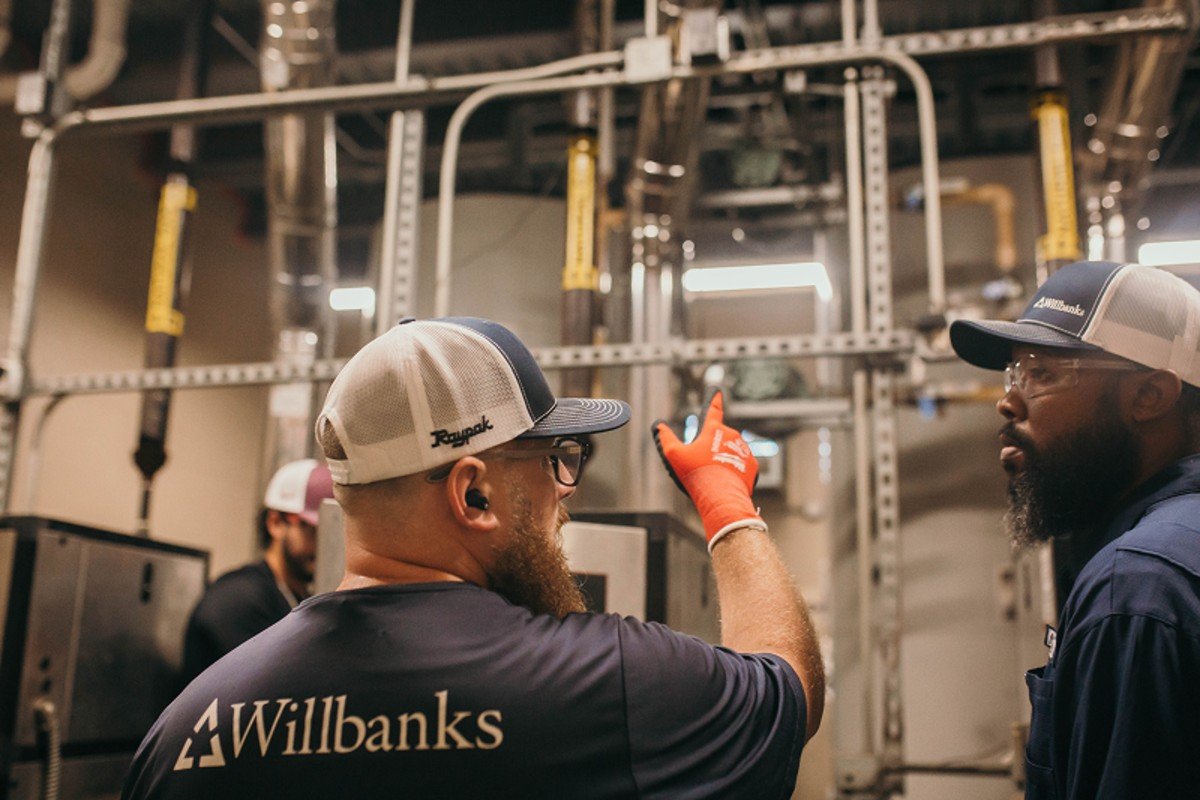
Preventative maintenance
Planned preventative maintenance for commercial boilers in San Antonio. Scheduled inspections, annual cleanings, and the descaling 21 grain water calls for.
Learn more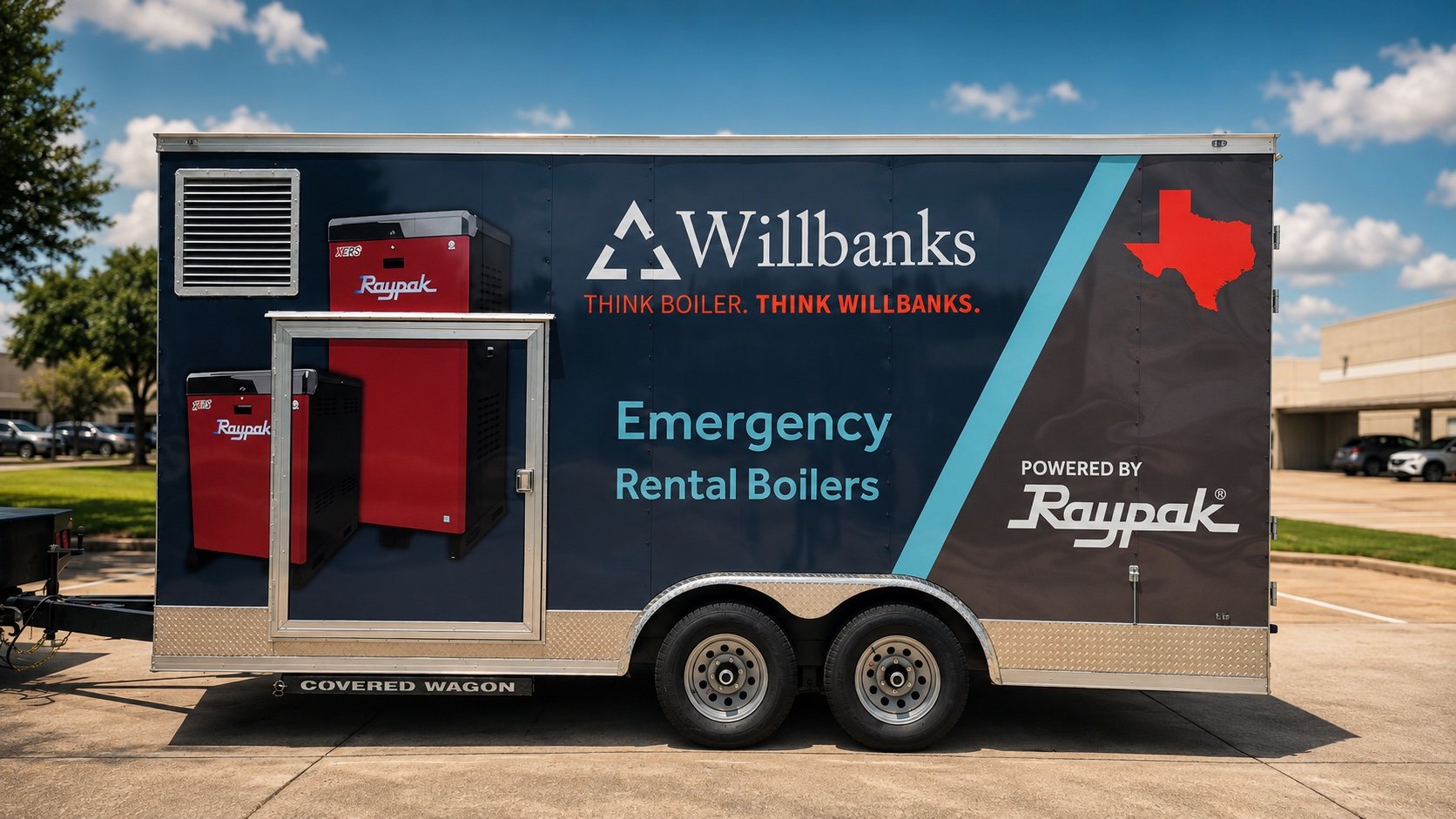
Boiler rental
Temporary and mobile boiler rental in San Antonio for emergency failures, planned outages, and surge load. Skid and trailer-mounted, hot water and steam.
Learn more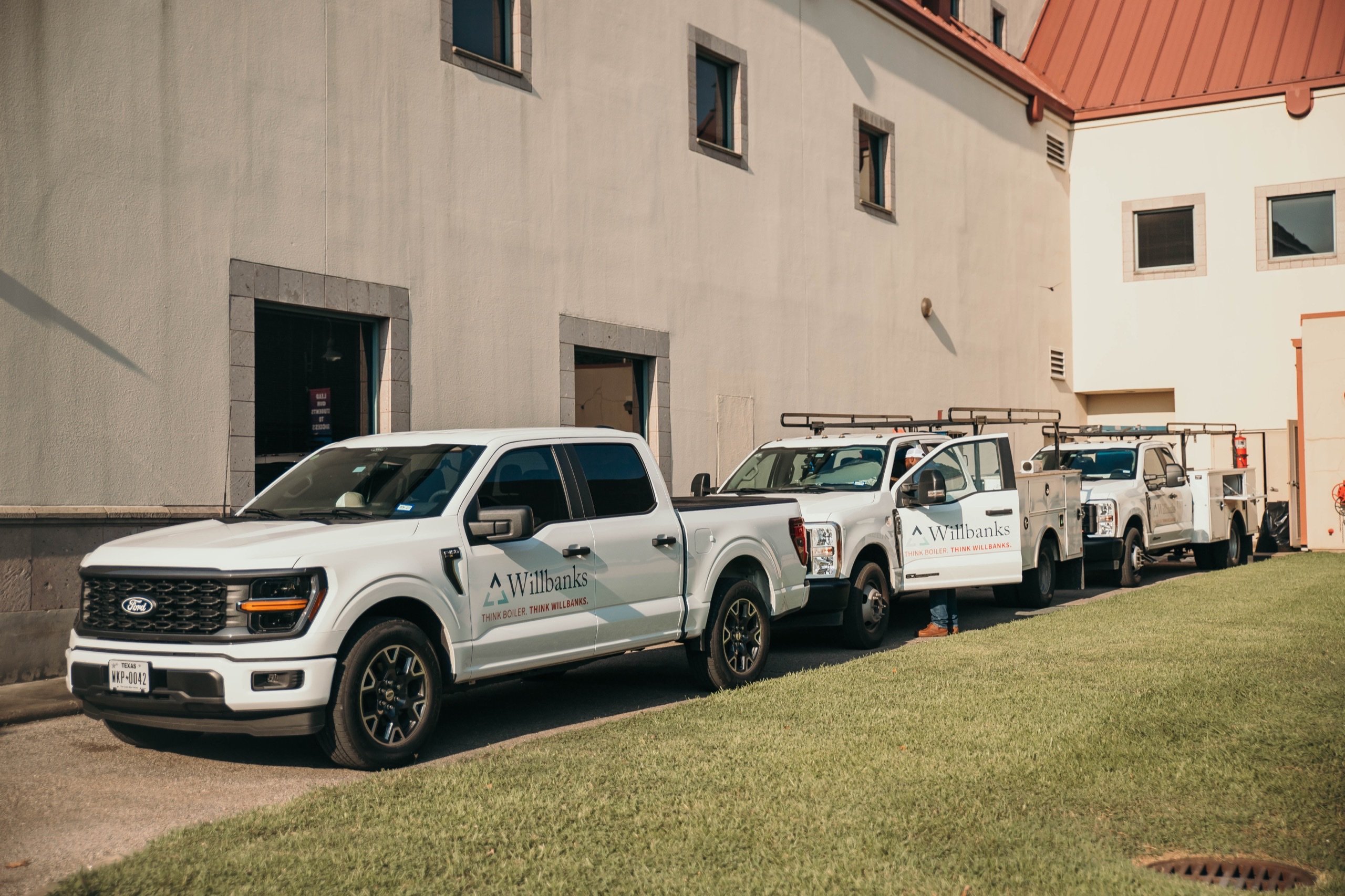
Parts & equipment
Commercial boiler parts and equipment from the Willbanks San Antonio branch on Randolph Boulevard. Will-call counter, with the Texas network behind it.
Learn more