
21 grains per gallon. Houston is 7.9. College Station is half a grain.
San Antonio water is hard: around 21 grains per gallon, or 357 parts per million. The standard scale calls anything above 10.5 grains very hard, so the city runs at roughly double that threshold. Houston reads 7.9. Austin reads 5. College Station is effectively zero. We keep readings for 67 Texas cities, and San Antonio sits at the top of the list.
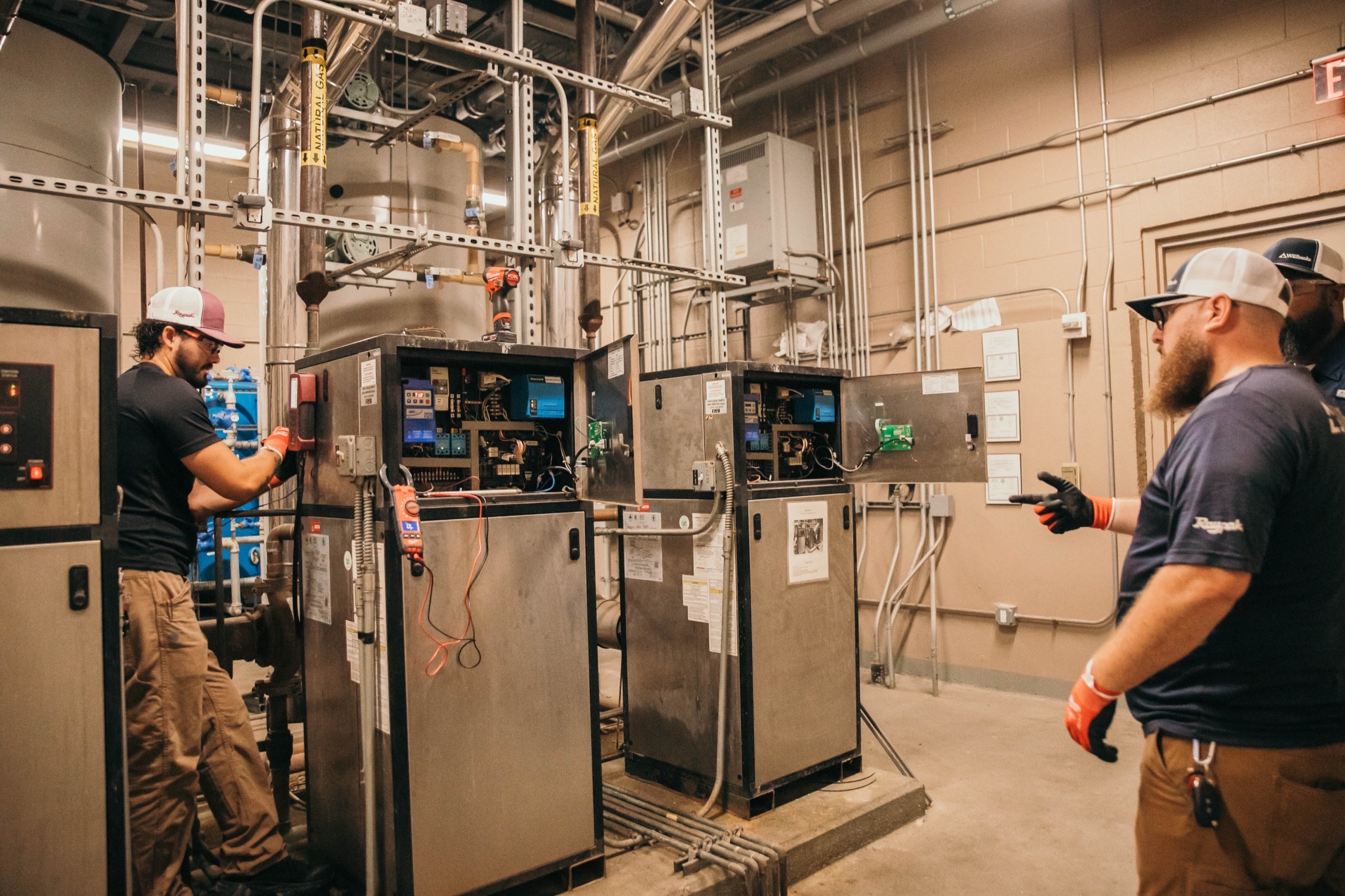
That gap is the whole story. The same boiler, installed the same way by the same crew, does not live the same length of time in San Antonio as it does in Bryan. Hard water deposits scale on the heat exchanger. Scale insulates the tube from the water it is supposed to be heating. The burner compensates by running hotter and longer, and the unit works itself to death years early.
The surrounding market is not soft either. New Braunfels, San Marcos, and Kyle all read in the mid teens. If you operate buildings along the I-35 corridor, the water is a design input, not a detail.
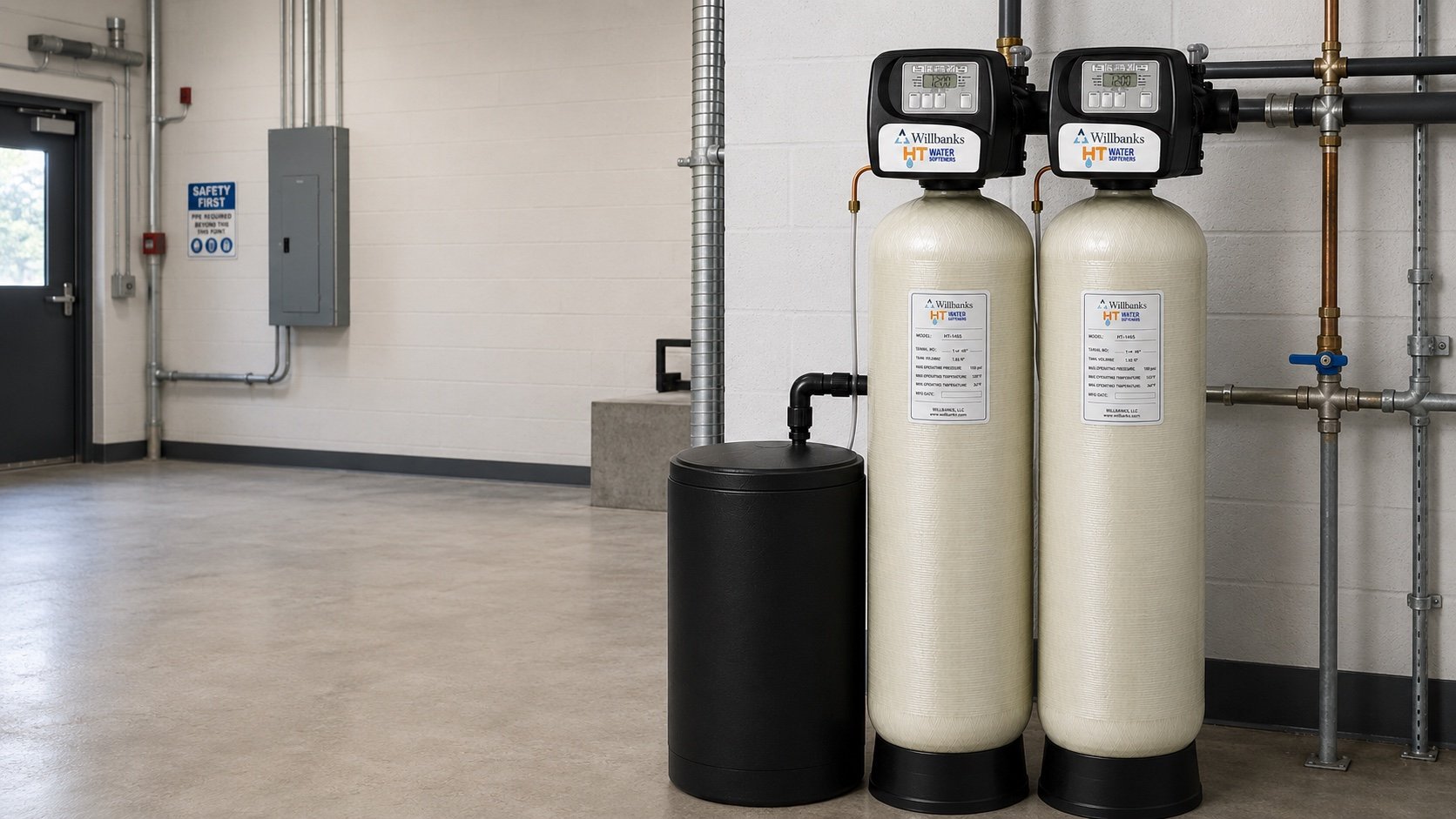
A softener is also not only about the boiler. It protects the storage tanks, the pumps, the heat exchangers, and everything downstream that sees hot water. If a boiler replacement is already on the table, that is the moment to add one: the system is down and the piping is open.
| City | Grains per gallon | ppm | Rating |
|---|---|---|---|
| San Antonio | 21 | 357 | Very hard |
| Kyle | 16.7 | 285 | Very hard |
| New Braunfels | 15.6 | 266.5 | Very hard |
| San Marcos | 15.3 | 260 | Very hard |
| Houston | 7.9 | 135 | Hard |
Test first. Size second. Then install.
Sizing a softener off the square footage of the building is how buildings end up with a unit that regenerates constantly and still lets hard water through.
An on-site hardness test, at no charge.
We test the water at the building rather than quoting from a municipal average. Two addresses in San Antonio can read differently depending on which supply they are on.
Sizing to the actual load.
Flow rate, hours of operation, and hardness decide the unit. A building that runs hot water all day needs different equipment from one that peaks for two hours.
Ion exchange systems, single or twin tank.
Twin tank where the building cannot be without soft water during a regeneration. Single where it can. The application decides, not the price sheet.
Installation, startup, and service after.
Brine tank, controls, and commissioning, plus the salt and resin service that keeps the system doing its job in year three.
Commercial water softener in San Antonio.
- Around 21 grains per gallon, or 357 parts per million, which is the hardest of any city Willbanks operates a branch in. Houston reads 7.9 grains, Austin 5, and College Station close to zero. The standard scale calls anything above 10.5 grains very hard, so San Antonio runs at roughly double that.
- Above about 10 grains per gallon you should assume treatment is needed on a commercial boiler. Below 7 it is usually a question of the application rather than the water. San Antonio at 21 grains is not a borderline case, which is why we treat water as a design input here rather than an upgrade.
- Yes, though not as hard as the city. New Braunfels reads 15.6 grains per gallon, Kyle 16.7, and San Marcos 15.3, all comfortably into very hard. If you operate buildings along the I-35 corridor, the water is a design input across the whole run, not just inside Loop 1604.
- In the majority of cases we would recommend one. At San Antonio hardness an untreated boiler scales quickly, and scale is what kills boilers. The cost of the softener is usually small against the cost of replacing a boiler years before it should have needed it.
- No. A softener stops new scale forming. It does not remove what is already on the tubes. An existing unit needs to be cleaned or descaled first, and then protected, or the softener is being asked to fix a problem that already happened.
- It depends on hardness, flow rate, and how many hours a day the building actually uses hot water, not on the size of the building. We test on site and size from the real numbers.
- It can. Many manufacturers set a maximum feed water hardness and treat damage from exceeding it as outside the warranty. We check the limit for your specific equipment before sizing anything.
The rest of what the branch does.
Everything below runs out of 6035 Randolph Blvd, with the same techs and the same inventory.
Boiler repair
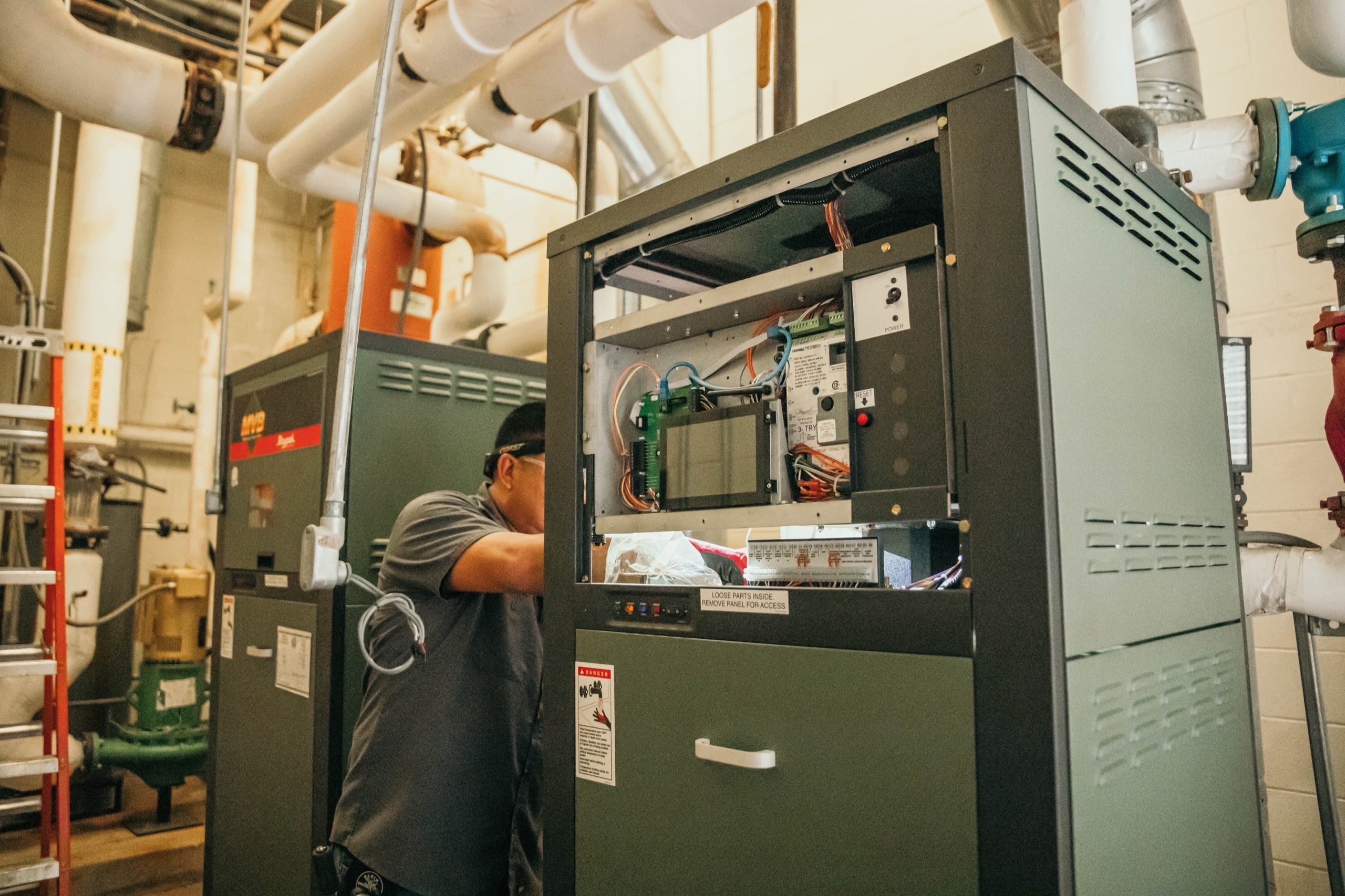
24/7/365 commercial and industrial boiler repair in San Antonio, steam and hot water, from our Randolph Boulevard branch. Any brand, not just ours.
Learn more
Preventative maintenance
Planned preventative maintenance for commercial boilers in San Antonio. Scheduled inspections, annual cleanings, and the descaling 21 grain water calls for.
Learn more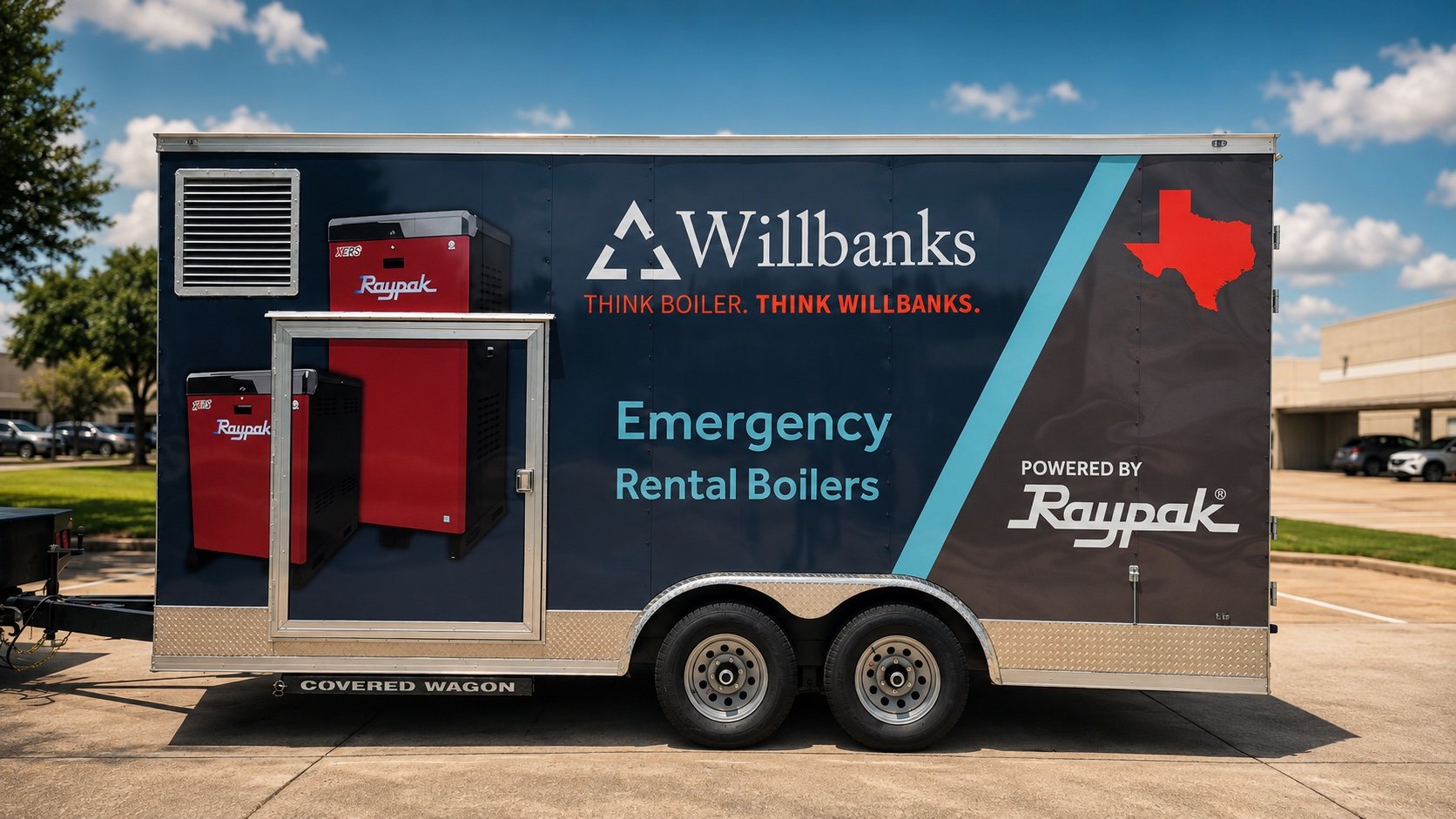
Boiler rental
Temporary and mobile boiler rental in San Antonio for emergency failures, planned outages, and surge load. Skid and trailer-mounted, hot water and steam.
Learn more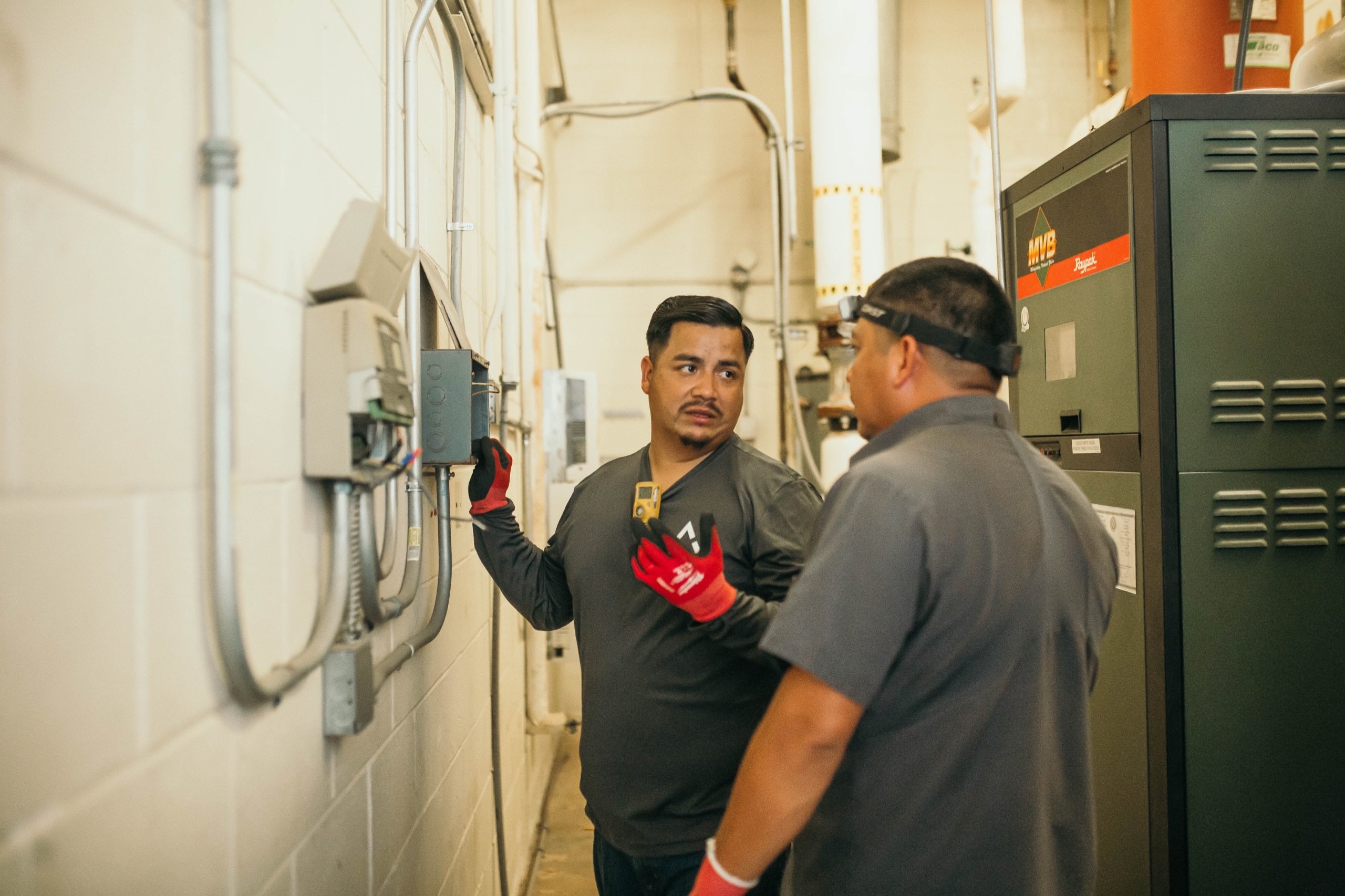
Boiler installation
Turnkey commercial boiler installation and replacement in San Antonio, including water treatment sizing and the TDLR filing and inspection the state requires.
Learn more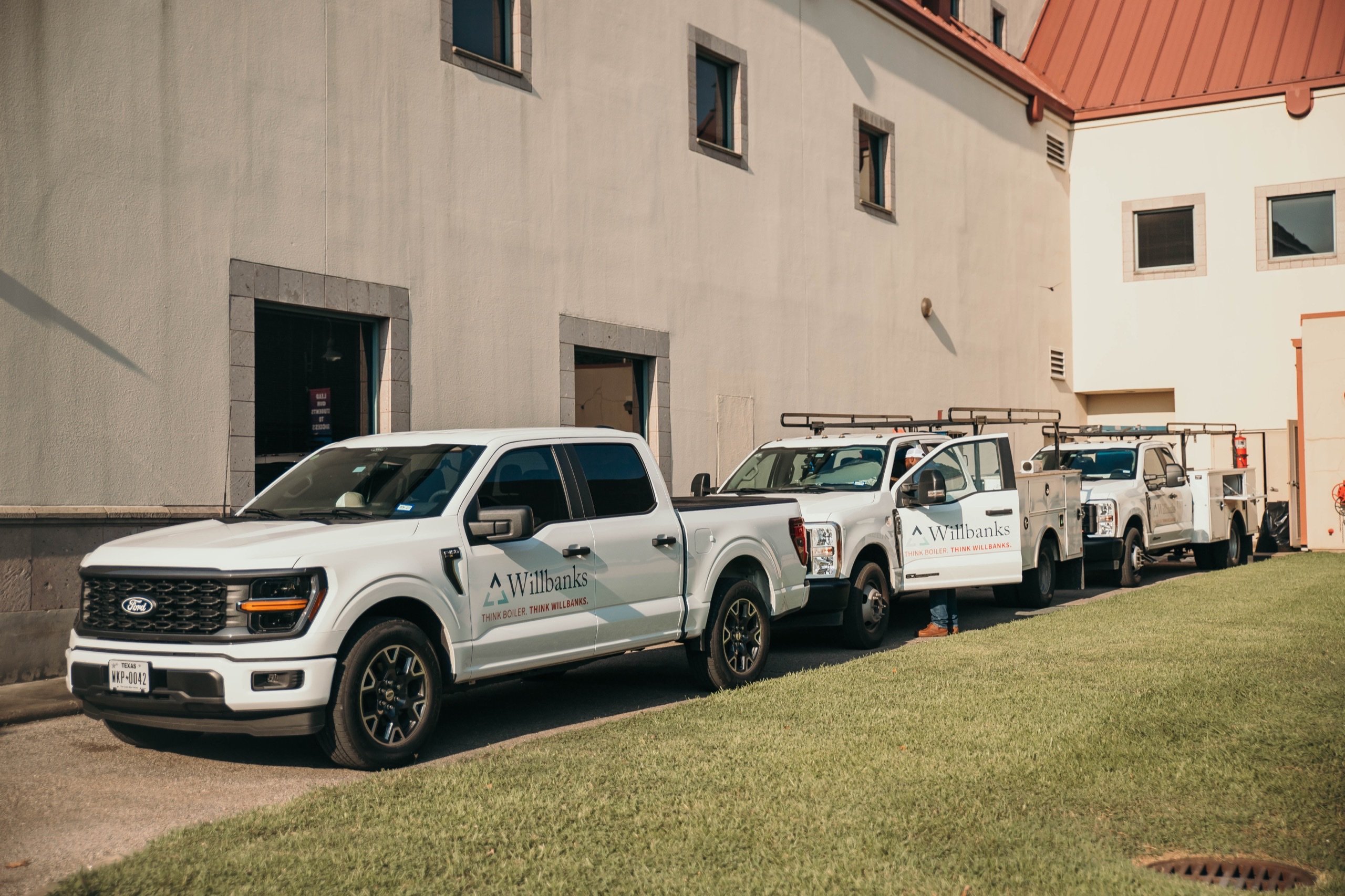
Parts & equipment
Commercial boiler parts and equipment from the Willbanks San Antonio branch on Randolph Boulevard. Will-call counter, with the Texas network behind it.
Learn more